How to Arrange Fence Installation Around Occasions
Planning a fencing task around an actual occasion is just one of those jobs that separates "paper estimates" from seasoned execution. It is never ever simply measuring lines, establishing articles, and hanging panels. You are collaborating with entrance traffic, distribution home windows, sound limitations, liability worries, and the type of schedule stress that makes tiny delays expensive.
I have actually dealt with fencing contractors and fencing firms long enough to understand the very same pattern repeats: every person agrees it will be great up until the initial day the occasion team requires space for staging, or until a vendor turns up earlier than anticipated, or until the weather condition transforms a "quick set up" right into 2 days of driving posts at minimized production.
This overview is built for that truth. It will certainly help you schedule fencing installation around occasions without turning the fence job right into the event's problem.
Start with the event, not the fence
The most significant error individuals make is developing the fence schedule from the fencing contractor's manufacturing strategy, then attempting to "fit" the occasion afterward. The fencing timetable needs to bend to the event schedule, due to the fact that the occasion is the fixed object. The fence is the relocating one.
When I am aiding a home owner, location manager, or residential or commercial property coordinator map this out, I ask the occasion side initially:
- What time do people begin arriving?
- Where do vehicles stage, and where do they need to drive through?
- What locations are definitely out-of-bounds throughout configuration and teardown?
- Are there any kind of sound constraints throughout practice session hours?
Even if you assume you already know, confirm it in composing. Event groups change assignments fast. A single person informs you "deliveries can happen anytime," and the following week an additional supervisor is enforcing rigorous accessibility rules. You want a single, clear set of restraints that your Fence company can arrange around.
Define fence areas that match event flow
A fence line is a continual asset, however your site is not. Your work is to deal with the fence as multiple areas so installation can continue without obstructing important paths.
Think in terms of just how individuals and equipment step during the event:
- Guest arrival routes
- Staff entrance routes
- Service roads and loading bays
- Back-of-house corridors
- Temporary staging areas
On numerous occasion websites, you can set up the "non-conflict" portions initially, while leaving sections near one of the most sensitive accessibility points for later on. This is where skilled fencing contractor planning issues. A less versatile strategy tries to finish the whole run before the occasion. That might look neat on a timeline, yet it often rams reality.
I have actually seen work where the team finished 80% of the run 2 days prior to the event, but after that they hit an area near the main hosting location that needed resuming eviction consistently. The fencing had to be partly adjusted or completed after the event anyway. Doing the exact same work in the appropriate order would have prevented the rework.
Pick an installment technique that matches the event's tolerance
Scheduling is not just concerning dates. It is likewise about exactly how you install the fence. The technique you select can transform the noise profile, the time needed on-site, and the quantity of short-lived obstruction.
For example, rail and panel secure fencing with conventional blog post spacing could be an uncomplicated set up, yet concrete curing timetables can compel a much longer wait prior to you can safely use gates or enable foot website traffic near newly established articles. If the occasion needs accessibility near the fencing line, you may require to collaborate a presented "set first, finish later" workflow.
This is where talking directly with the fencing contractor or fencing company ends up being crucial. The most effective contractors will certainly inquire about occasion restraints early, instead of waiting until the day they appear with tools and a totally devoted install plan.
Build your timetable around gain access to windows
Event days seldom allow "continuous work." You normally obtain gain access to home windows: an early morning period prior to participants get here, a late mid-day block after foot website traffic slows, or a slim configuration and teardown window. Your fencing plan needs to straighten with those windows.
You also require to take into consideration lorry accessibility for materials. Panels and posts are bulky. If the event calls for particular areas to remain open for safety workers or emergency situation lanes, you can not simply assume a delivery truck can park anywhere the staff wants.
A practical method to structure the schedule is to separate the work into three stages:
- Pre-event job (layout, materials staging, non-conflict areas)
- Event day and bargain security (upkeep, marginal activity, no significant obstruction)
- Post-event completion (coating sections, gate changes, last positioning)
If the fencing specialist is versatile, they can commonly do phase one in a fast home window, after that return after the occasion for staying sections. That minimizes the opportunity you will certainly trap the event in your building and construction timeline.
Plan for the format day, because that is where problems start
Fence format is remarkably sensitive. Noting lines, staking corners, and confirming post locations can develop immediate problems with short-lived fencing, signs, or occasion infrastructure.
On one work I oversaw, the event staff had installed temporary barriers for a celebration midway down the property. The long-term fence line was intended to attach right into that barrier network. On format day, the short-lived setup had been moved just two feet. That appears minor up until you realize two feet can land a post directly in the center of a service route.
We repaired it rapidly by re-confirming the balanced out and re-staking the line, however the lesson stuck: layout needs to be dealt with as an event-support activity, not a casual pre-work step. Arrange layout when occasion personnel can be present to assist the last path and to verify what should remain clear.
Communicate clearly about gateways, personal privacy, and sightlines
Events bring distinct needs to fencings, specifically when the fencing is part safety, component crowd control, or part privacy for back-of-house operations.
You need to define how the fence should behave throughout the event:
- Which entrances have to come to staff
- Which gateways need to be locked or secured
- Where shipments go into and exit
- Whether visitors require a clear sightline or an obstructed view
The fence company can construct the framework, however you are the one setting the efficiency requirements. If the occasion needs a gate that can open up and close accurately throughout the day, routine installment and hardware so it can handle repetitive use.
Hardware likewise takes time to readjust. Gate hinges need placement. Latches require tuning. If the timetable is also hostile, the gate could "function" for a week and afterwards begin binding when the posts work out or when the panel load changes. A strong routine stays clear of the lure to hurry last changes the day before the event.
Decide what job is secure during the occasion, and what is not
Not all fence work is equivalent in regards to occasion interruption. Drilling, excavating, cutting, and concrete job often tends to create noise and safety problems. Even if you technically can do it during an occasion, you typically must not.
However, some tasks can be finished with marginal disruption, like:
- Final trimming on already set up sections
- Adjusting entrance equipment that is located far from the crowd path
- Carrying in products to a safe and secure hosting area
- Securing loose panels after short-lived access
To be crucial, align your boundaries with the occasion manager and the fencing contractor. Decide where tools can be saved, where particles can be positioned, and exactly how the site will certainly stay secure for attendees.
This is additionally where responsibility reasoning matters. If event personnel can access your job zone, they require clear instructions. If attendees can unintentionally wander right into it, the threat increases. Setting up fencing work to avoid these scenarios typically saves cash, because it avoids "little" events that come to be big insurance coverage conversations.
Use a staged technique when timing is tight
When the occasion date is close, the routine needs to be staged. That means you mount what you can promptly, leave the most sensitive areas for a later phase, and make certain the occasion can still operate safely.
A staged method typically resembles this in technique:
- Complete the external boundary that is the very least included with web traffic throughout the event
- Leave eviction area or high-usage gain access to factors incomplete until after the event
- Install momentary obstacles where needed to preserve separation up until the irreversible fence is fully complete
This approach requires a professional who fits with partial conclusion and that can go back to finish the work without developing a noticeable inequality. Not every fencing contractor wants that work because it calls for mindful preparation and persistence, however the right team sees it as accountable task management.
If your fencing company is inexperienced with occasion schedules, you may need to provide even more information. The service provider still requires to do the job securely and correctly, yet your clarity regarding top priorities makes a huge difference.
A quick choice checklist for event week
If you just do one thing, do this before the team turns up on the first day:
- Confirm specific distribution and staging courses for occasion logistics
- Identify gateway places that need to be operational during the event
- Choose which fencing sections to leave for post-event completion
- Agree on sound, dirt, and accessibility restrictions by time of day
- Plan debris elimination so it does not splash right into occasion traffic
That is not busywork. It is how you stop the timetable from unraveling on day one.
Coordinate weather and healing like you mean it
Fence installment is outdoors job, and schedules that neglect climate are fantasy routines. Rainfall impacts ground conditions for post openings and can slow excavating. Wind influences panel positioning and safe handling. Heat can accelerate some tasks, however it can likewise produce safety and security concerns and make concrete handling more time-sensitive.
Curing time is a significant scheduling variable, specifically if you are using concrete for articles. If the fence service provider sets posts with concrete, you usually need adequate time for the concrete to reach usable strength for the following actions. The precise requirement relies on product kind, temperature, and density, so you can not depend on a single "one size fits all" treatment declaration. Yet you can rely on the principle: if the timetable is as well limited, the high quality experiences, and the gate alignment will certainly pay the price.
In event scenarios, you could require to permit extra buffer days so that gateways and hardware can be adjusted without emphasizing the posts.
A vibrant regulation I use with customers is basic: never ever schedule the "finish day" as the day immediately before the event unless the range is simply non-invasive work. Complete job is where alignment and changes happen. Those are best done when you have time to fix blunders, not when you are viewing traffic and counting down minutes.
Price and extent: recognize what you are really paying for
Scheduling a fencing around an event can enhance job price. Sometimes it is because of staff organizing, often due to the fact that the contractor needs to prepare distributions in a different way, and sometimes due to the fact that you are developing a partial develop with return visits.
A fencing company might charge a lot more for mobilization to damage the task into stages. Or they might price the whole task yet still need you to pay for added website time if the event pressures stop-start conditions.
To keep this fair, discuss scope clearly prior to job beginnings. Ask what is consisted of for each and every stage. If you are just setting up component of the fence before the occasion, specify which sections are considered total, and what "complete" means.
Questions that maintain contracts clean
These are the concerns I would ask any type of fencing contractor prior to the occasion week:
- Which fencing areas will be mounted pre-event, and what is left for post-event?
- Are entrances useful after phase one, or are they left for later adjustment?
- How will certainly the specialist handle concrete curing if occasion access is needed?
- What are the debris elimination and cleaning obligations throughout the phased schedule?
- If event gain access to adjustments, that determines the modified strategy and exactly how is it billed?
Answers to those inquiries avoid the traditional inequality where the client assumes stage one includes gateway adjusting, however the service provider assumes equipment finalization is post-event only.
Make sure the occasion group can actually support your plan
You can schedule job flawlessly theoretically and still stop working if the event team can not sustain it. Support means easy things: an event planner who can fulfill the team, somebody who can verify road gain access to, and a clear point of get in touch with for changes.
A great deal of organizing problems originate from a missing single voice. If the event manager is hectic, the staff could deal with whoever takes place to be readily available. That results in choices that do not straighten with the larger plan.
The repair is simple: specify one factor of contact for the fencing contractor and make sure that person is offered throughout your scheduled windows. If that person is not available, timetable the job home window for when they are.
This is one reason I such as collaborating with seasoned building managers. They recognize how to safeguard access and just how to communicate regulations quickly to team and vendors.
Staging and protection: deal with short-term configurations as permanent
During event week, you may have temporary products stored on-site. You may additionally require temporary barriers until the long-term fence areas are total. Those momentary aspects can become part of the safety and security and protection prepare for the event.
Your fencing installation routine should include time for hosting and site security, not simply the last build.
Here is where I have actually seen problem:
- Materials saved in a place that later blocks equipment
- Temporary barriers moved without notifying the fence contractor
- Tool storage space positioned near a group gain access to point
- Post-hole cleaning ignored until it becomes a safety and security issue
An expert fencing contractor or fencing company intends staging areas and cleanup regimens. But you should still verify it early. If the occasion has a protection plan, collaborate your hosting with it.
Align the fence visual with the occasion's public-facing needs
Even when the fencing is primarily practical, events have a public-facing aspect. Guests discover the sides, the gates, the alignment of panels, and how the fence shifts to existing structures.
If you intend to mount just parts of the fencing before the occasion, you have to decide just how those partial areas will look throughout that time. Will you leave unfinished ends? Will you top or brace them? Will certainly the line look regular from the public side?
Good service providers can deal with partial completion cleanly, but you need to interact where guests will see the fence most. If the general public side is the side encountering the main entry, that is where you should prioritize an attractive finish pre-event.
For example, if you are linking the fencing to a structure or to an existing obstacle near the access, routine enough time to make that change crisp. If you leave it for after the occasion, the aesthetic mismatch may draw interest that you do not want when the occasion is already under pressure.
After the occasion: do not go away, complete deliberately
A fence job is refrained when the last panel rises. It is done when entrances close smoothly, lines are straight, and the setup stands up under real conditions.
After the event, timetable a conclusion window with time for adjustment. Individuals rush post-event jobs because they want to "get out of there." That seriousness is reasonable, but it is also exactly how you wind up with an entrance that squeals, messages that resolve unevenly, or sections that look fine from 10 feet away yet fall short at close inspection.
A great fencing contractor will return promptly after the occasion and validate that whatever is established effectively. A strong fencing company will additionally document what was done pre-event and what stays. That documents makes it simpler to pick up without repeating decisions.
An easy post-event conclusion strategy
You can reduce stress and anxiety after the event by organizing the conclusion operate in a manner in which is predictable:
- Verify gate positioning and lock operation before leaving the site
- Check fence line straightness and panel spacing from several angles
- Secure any kind of changes that were secured throughout the event
- Confirm that clean-up is full, including minor particles and scrap
- Take a few images for upkeep recommendation and warranty records
No theatrics. Just intentional finishing.
Real-world situations and exactly how to set up them
To make this useful, here are a few typical event-fence circumstances and the organizing logic I would certainly use.
Scenario 1: Outdoor wedding event with minimal access to the driveway
The driveway may be the main visitor arrival course. If your fence ties right into that area, you can not obstruct it with building equipment for weeks. Set up design and stage one installment early enough that you can complete non-conflict areas before the occasion weekend break. Then leave any entrance equipment adjusting for the day right after the event, when accessibility is less sensitive.
If concrete is entailed, do not arrange the post-event conclusion so late that you lose time to treat and adjust. https://www.facebook.com/61557710771508_122243895524257025 The fencing needs to be stable before visitors show up, also if the final cosmetics can occur quickly afterward.
Scenario 2: Company event where the fence sustains group control
In this situation, the fence may not be optional. It is proactively utilized to route people. That indicates areas near crowd entry points need to be prepared and practical. Schedule those sections first, also if they require even more careful sychronisation and slower manufacturing because of accessibility constraints.
Anything near high-traffic entry ought to be dealt with as high top priority. Areas far from the crowd course can be set up later on if they will not visually sidetrack from the event setup.
Scenario 3: Community festival with frequent vendor deliveries
Here, the fencing timetable can stop working if distributions and hosting areas are not worked with. Vendors typically reach unpredictable times. Build in a staging plan and validate distribution courses with the occasion supervisor. Then routine setup jobs that do not depend upon an ideal distribution home window, or timetable even more of the work throughout calmer durations when the vendor flow is predictable.
In celebrations, the fence should not end up being a traffic jam. A fencing contractor who understands web traffic flow matters as much as their building and construction skill.
How to select the right fencing contractor for event scheduling
You can find fencing contractors that are proficient at constructing fencings and secure fencing business that are good at marketing them. Event organizing needs both building ability and task control discipline.
When you speak with service providers, pay attention to exactly how they handle your occasion inquiries. Do they ask about arrival times and hosting paths? Do they propose a phased plan? Do they explain curing and exactly how it affects gateway procedure? Do they discuss cleanup and security limits around crowds?
A contractor that is genuinely event-aware will treat your timeline as real restrictions as opposed to "information that we will identify later on." That state of mind is what transforms a demanding week into a workable one.
The organizing details that in fact save money
When spending plans tighten up, individuals often cut the incorrect things. They decrease intending time or avoid the format confirmation and afterwards spend for it later via rework, hold-ups, or extra return visits.
The cost savings typically originate from a few wise selections:
First, routine the components that require the most website disturbance earliest, when you have more organizing flexibility. Second, use stage completion so the event is never required to run around incomplete construction. Third, prioritize gateway planning, because gateways are where tiny positioning problems become everyday functional problems.
Finally, maintain the interaction loop limited. A single missed out on access upgrade can require a day of no-work, and no-work days are expensive in labor and mobilization.
A clear course from plan to finish
When you set up fencing installation around events, the fence is not the schedule anchor, the occasion is. Your task is to convert the event's circulation into a build sequence that values access, safety and security, noise, and treating realities.
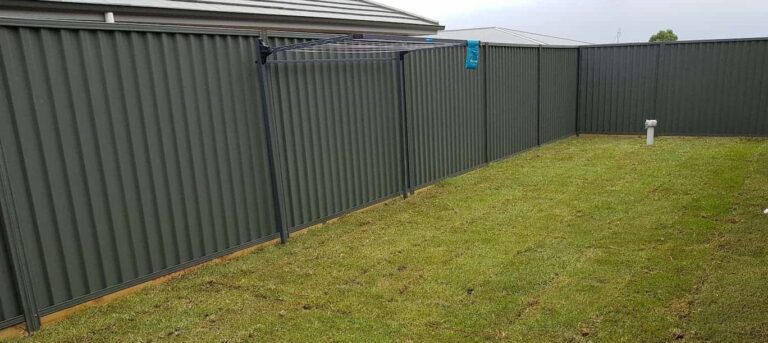
If you approach it like a worked with site operation, not a standalone building work, best fence installation company you obtain the outcome everyone desires: a fence that remains in area when the event begins, steady and practical when guests get here, and completed appropriately without last-minute heroics.
Whether you are dealing with a fencing contractor you trust or picking a fencing company for the first time, the principles stay the exact same. Strategy zones. Phase the work. Validate gateway demands. Treat layout and cleaning as component of the timetable. And build in sufficient buffer that weather and healing do not require you into a concession you regret later.